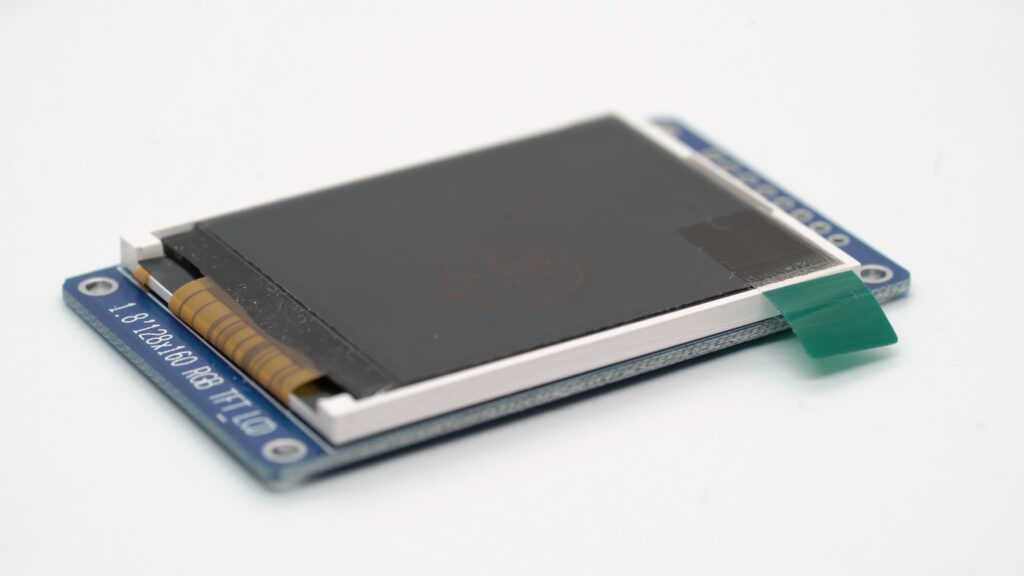
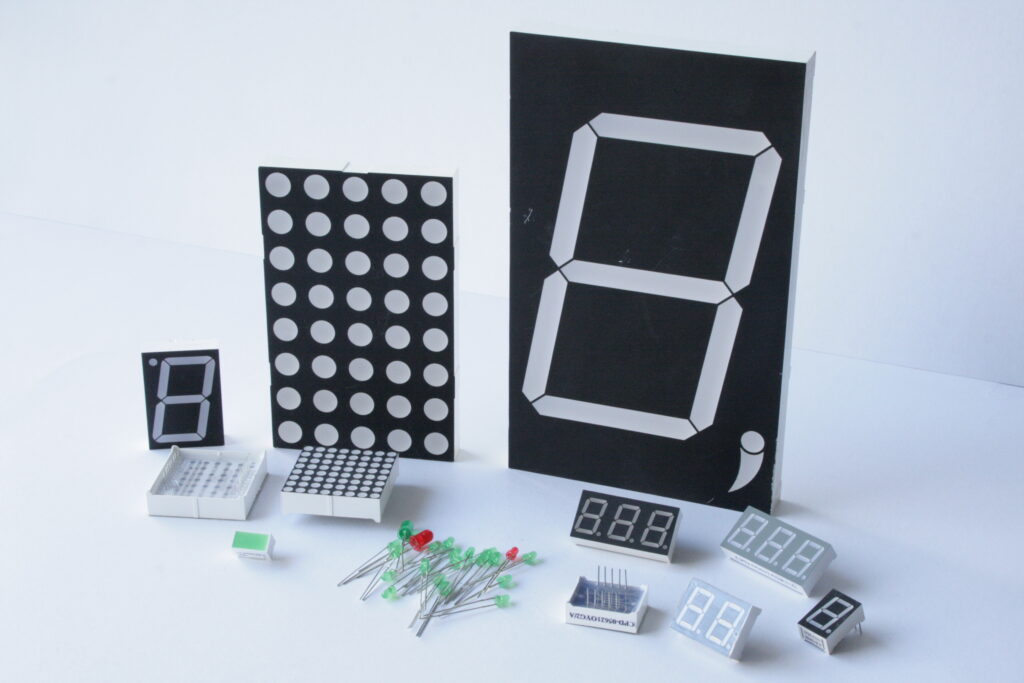
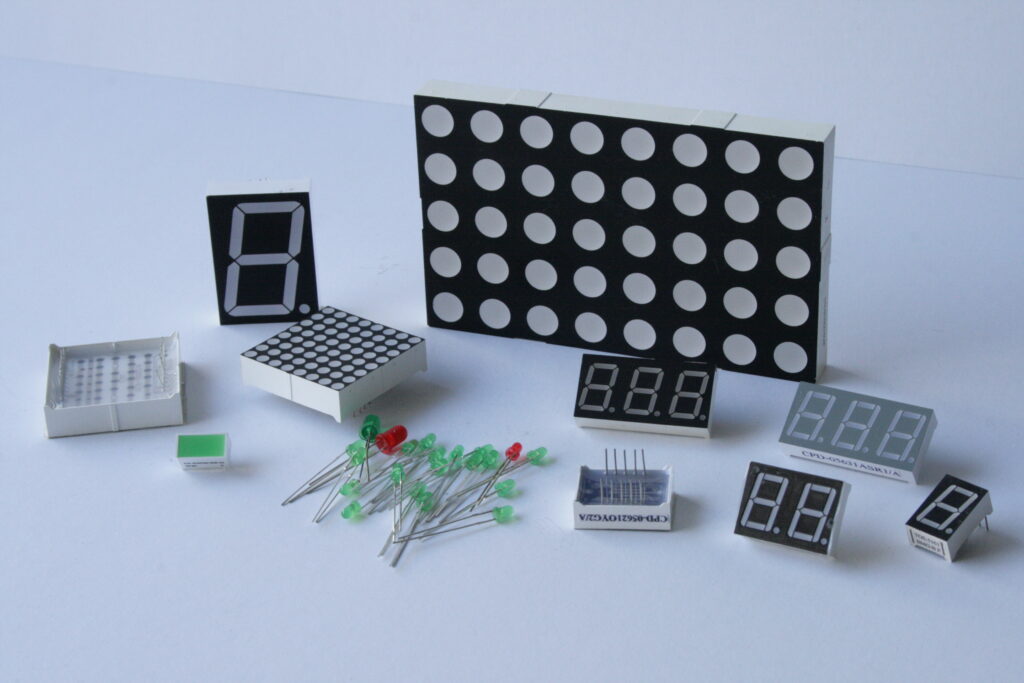
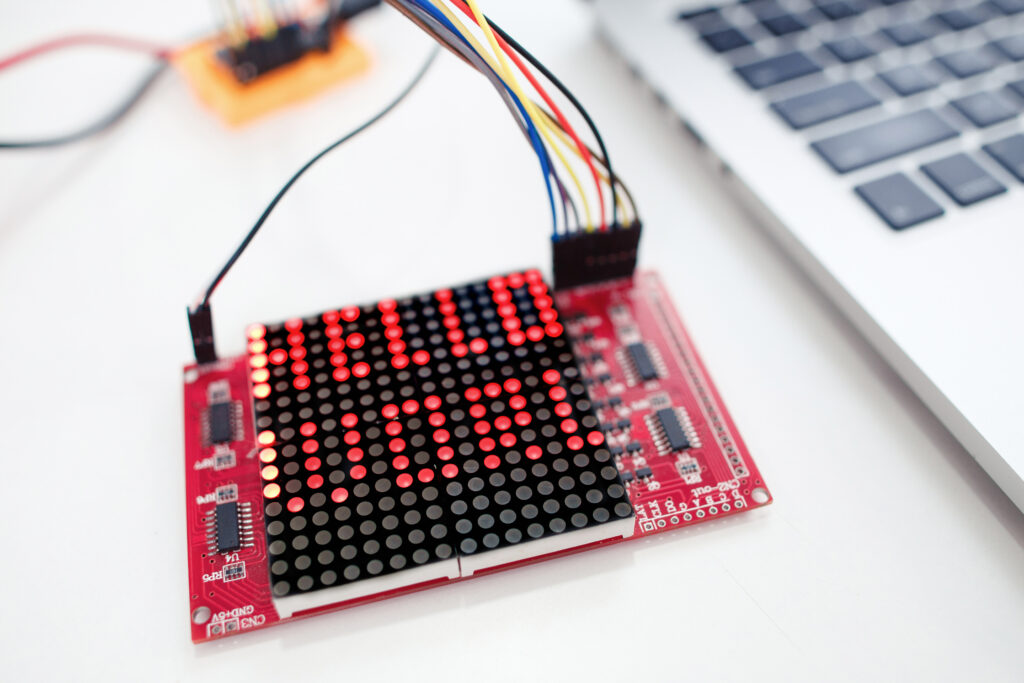
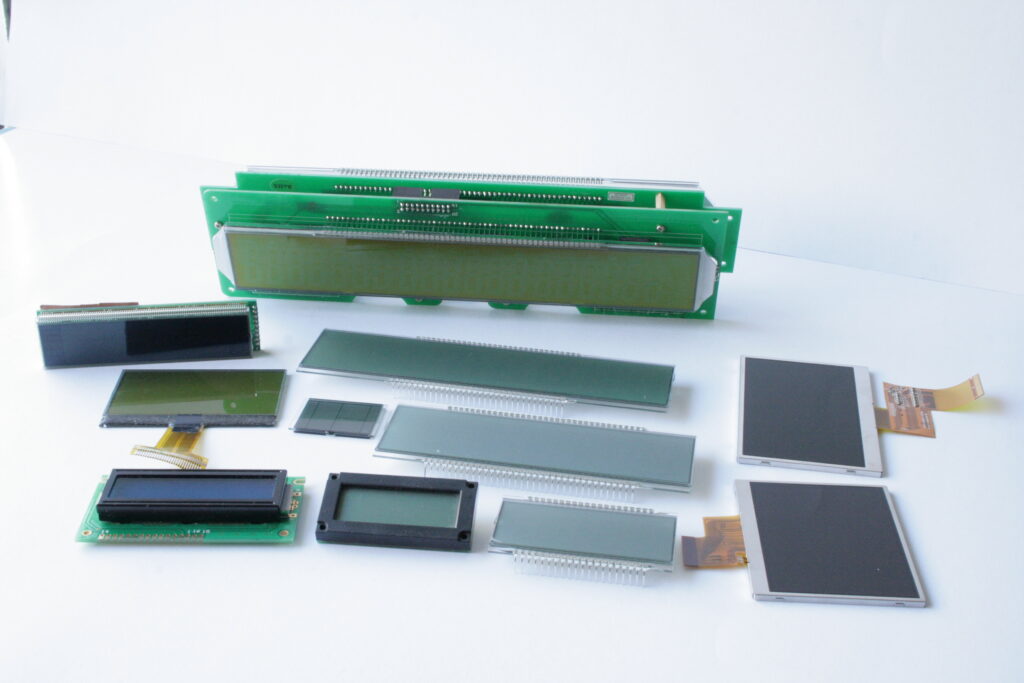
LCDs use liquid crystals that modulate light to display images or information
LCD Display
An LCD display (Liquid Crystal Display) is a flat-panel screen that uses liquid crystals to control light and display images, numbers, or text. It doesn’t emit light by itself — instead, it uses a backlight (usually LEDs) that shines through the liquid crystal layer to create visible images.
Segment LCD: Shows fixed symbols or numbers (like in calculators or digital watches).
Character LCD: Displays letters and numbers (commonly 16x2 or 20x4 characters).
Graphic LCD: Can show images, icons, and complex graphics.
TFT LCD (Thin Film Transistor): High-quality color display used in phones, monitors, and TVs.
LED display
An LED display is a flat panel screen that uses Light Emitting Diodes (LEDs) to produce images, text, or video. Each LED acts as a tiny light source, and when grouped together, they form pixels that create a visible image.
Brightness: LEDs emit strong light, making displays visible even in bright outdoor environments.
Energy Efficiency: They consume less power compared to older display technologies like fluorescent or incandescent systems.
Long Lifespan: LEDs have a long operational life, often exceeding 50,000 hours.
Color and Contrast: Capable of producing vivid colors and deep contrast levels.
Scalability: Panels can be joined to create displays of any size or shape.